Postcards from Japan

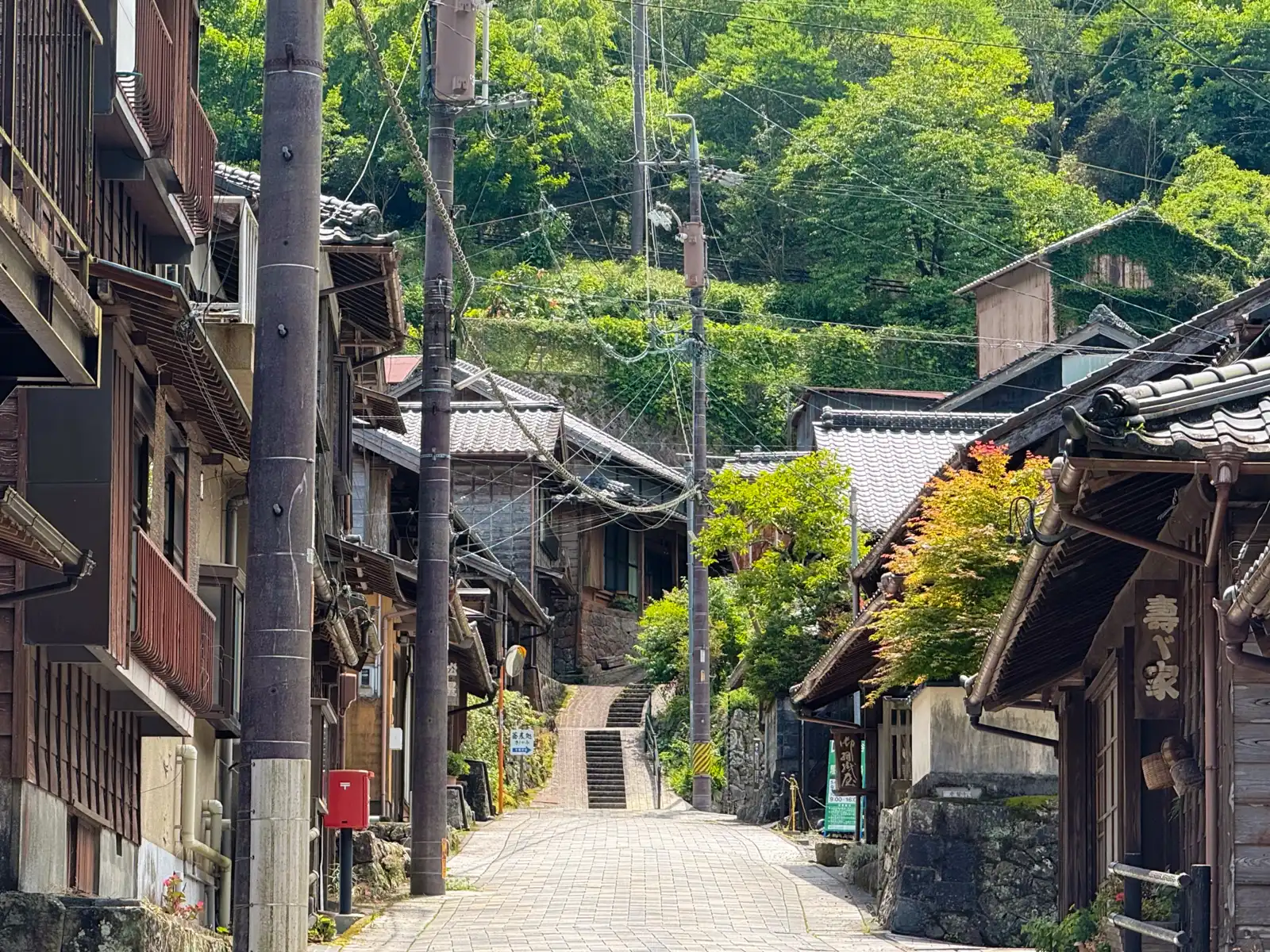
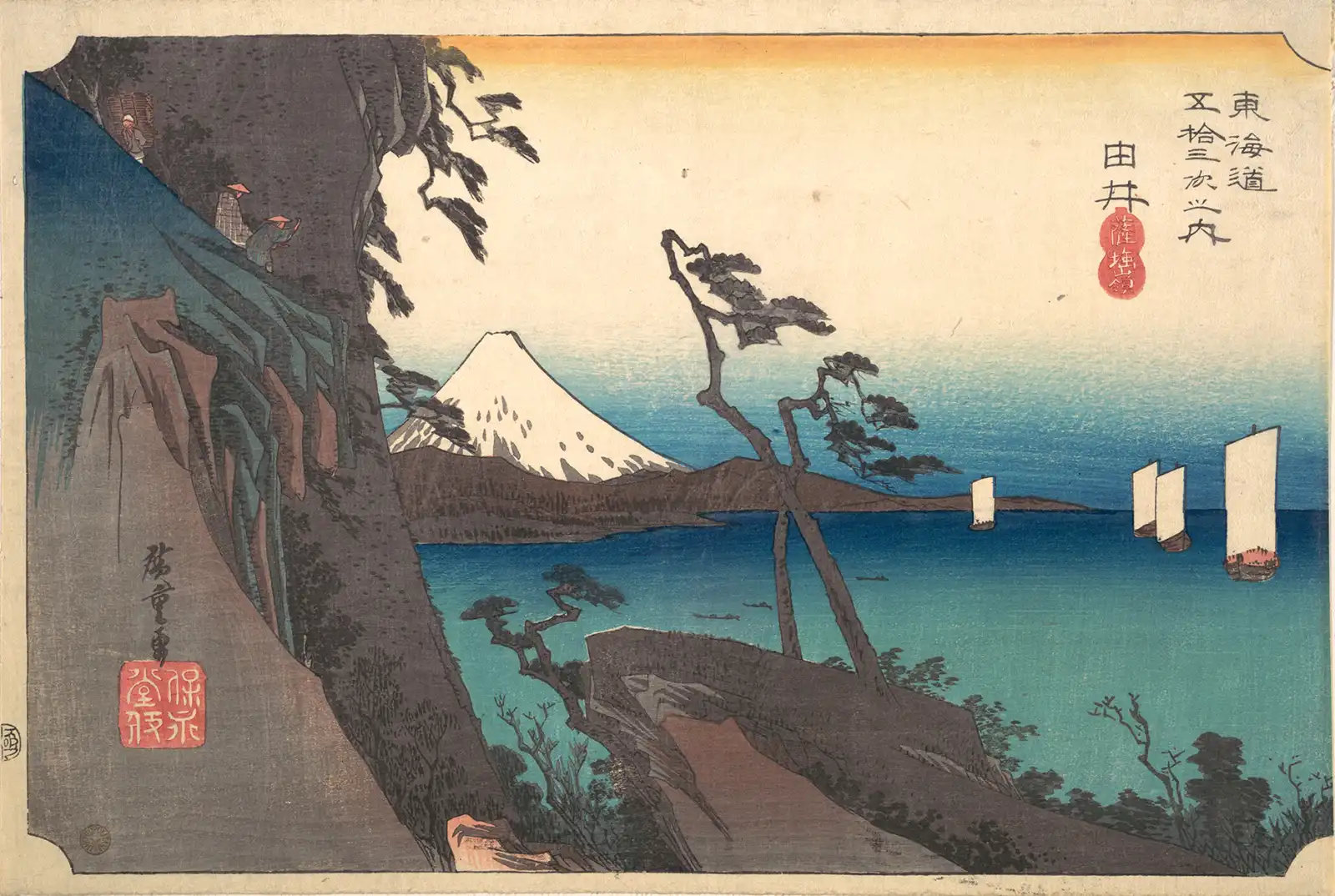
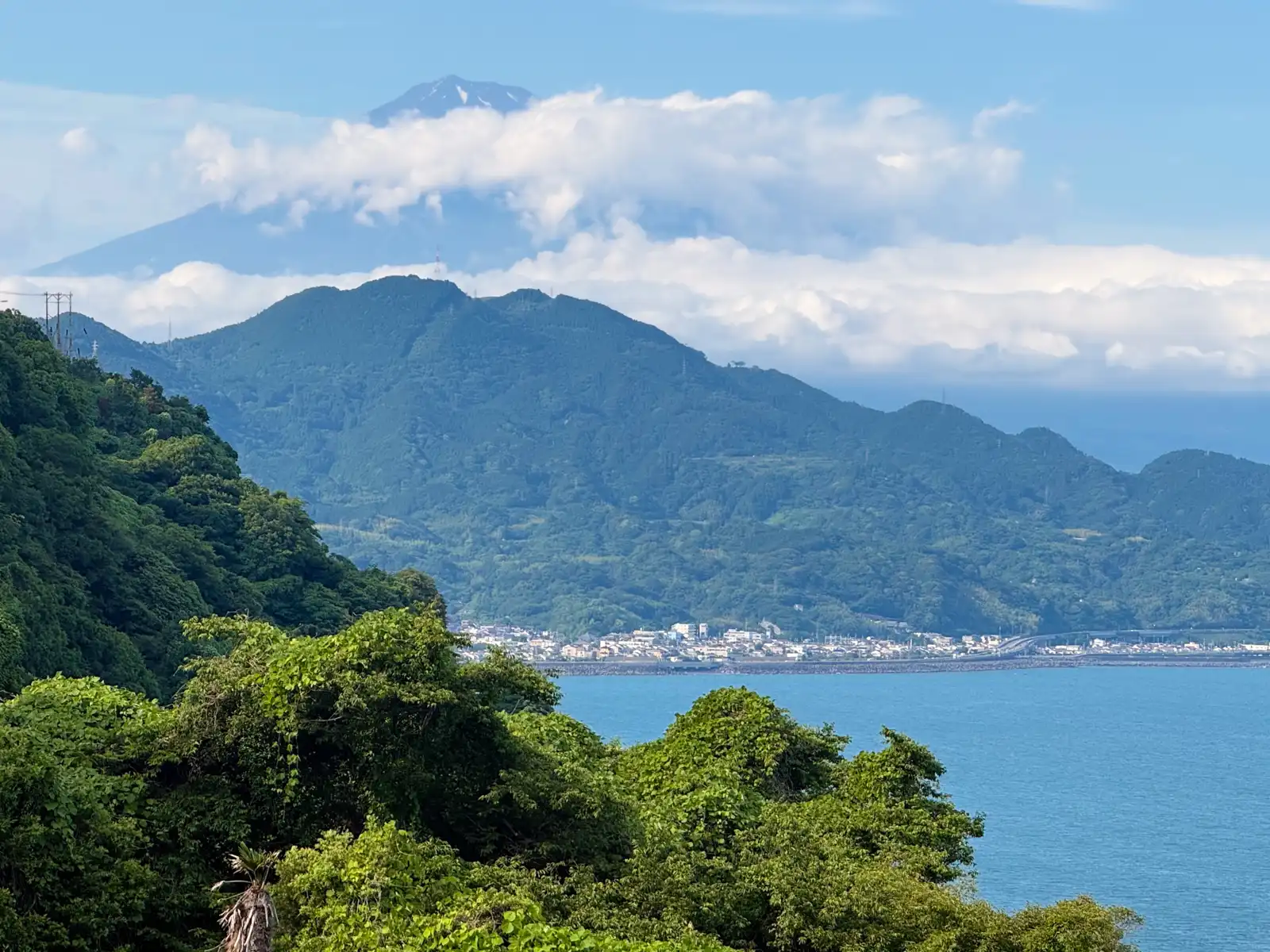
Same distance as Day 1, a lot more uphill, and a couple of things I hadn’t planned for: a route that tried to send me through a military training ground, and a Mt. Fuji that stayed hidden the whole way past it. Then down through the tea fields of Shizuoka to the coast.

Last night did not rain. I left the hotel early in the morning and rode northwest, following the Sakawa river. For a while the road ran flat through farmland, tilled fields on either side, and here and there a huge old tree standing alone at the edge of a field. No traffic, no hurry, just the fields, the birds, and the river in the early light. A pheasant darted across the road in front of me. I fumbled for my phone, too slow, and he disappeared into the brush before I could snap a shot. Further on, I could see the forested mountains ahead, with fog still hanging on the slopes. I’d cross through a valley between them, but the climb was still waiting for me.

No idea how old this tree is, but it has clearly outlasted everything around it.

Read more...

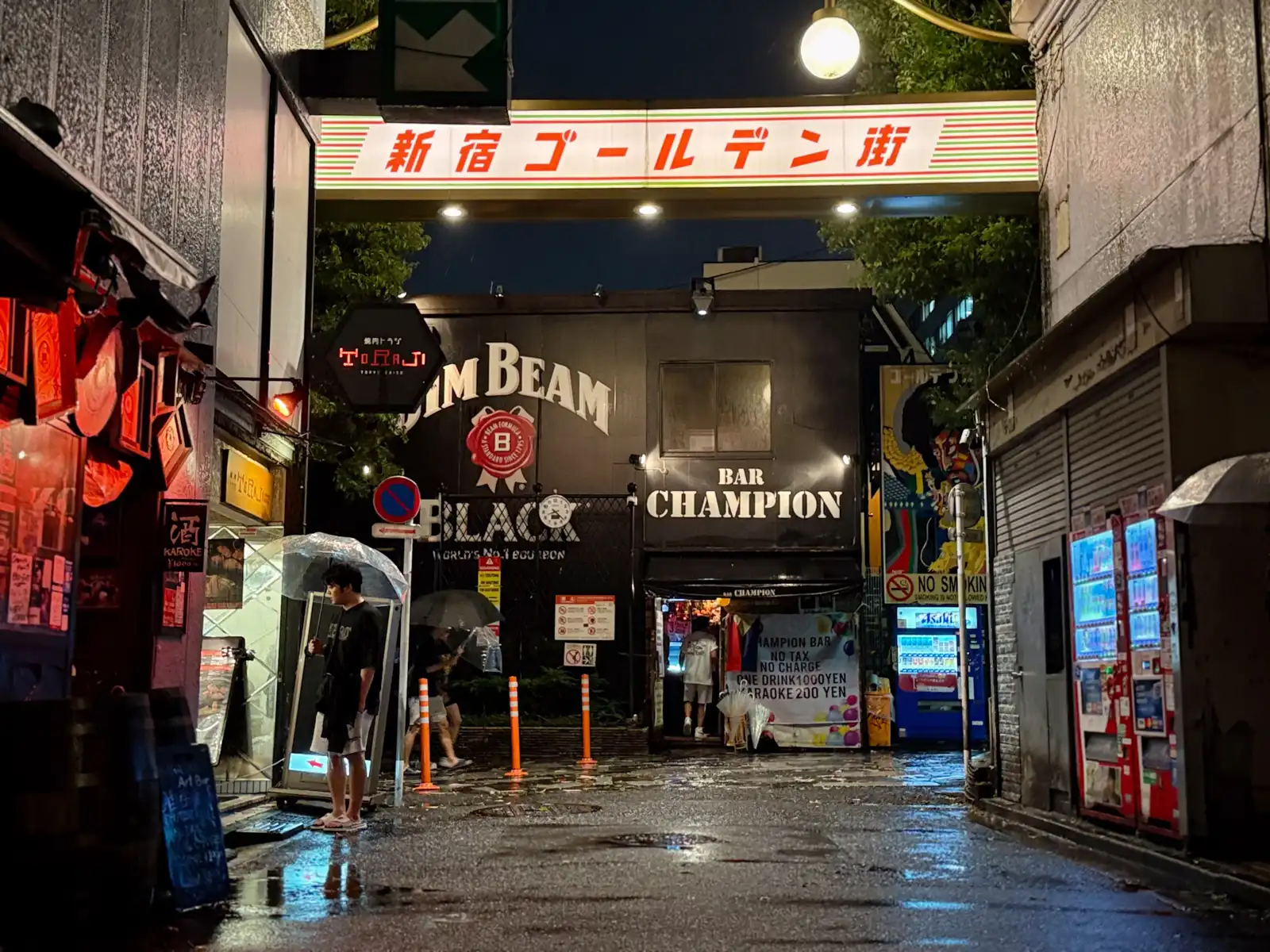
The first day of riding from Tokyo to Kyoto took me out of the city, down to the sea at Shonan, and into Odawara by evening, past a secret Blade Runner alley, a beach run by crows, and a hotel named Drake.

And here I thought I could journal on this blog while riding from Tokyo to Kyoto, like I promised in my last post I would. Fat chance. Most days were seven, eight, nine hours in the saddle, and by evening my legs were done and my head had nothing left for writing. If I’d really wanted to journal, I’d have had to narrate into a voice recorder while pedaling up a hill, gasping between sentences as the cars went by and possibly missing the next drink vending machine.

Which is why I’m only writing this now. I finally parked myself at the corner seat on the second floor of Doutor — my favorite seat in Kyoto, the one I try to make for every time I’m here. Why this seat? Because it’s the VIP seat, and the price of admission is one chilled Shine Muscat Yogurn (which is what I’m sipping right now, and it fits the hot weather). I’ve got the perfect view of Shijo Ohashi, one of the most famous bridges in Kyoto. Hordes of tourists cross it at any given time, snapping selfies and shooting photos of those fancy restaurants on wooden pillars along the Kamogawa. Two hawks keep circling the bridge strategically, looking for a chance to snatch some food. The sky is perfectly clear, and across the water the Minamiza kabuki theater catches the light of the setting sun. Hard to believe that in two days all of this will be drenched in rain from an upcoming typhoon.

Read more...

The weather has finally cleared up, which means I’m doing the thing I’ve been threatening to do for months: riding from Tokyo to Kyoto by electric bicycle.

This trip has been on my mind for a while now, and recently I’ve been monitoring the weather closely, in hopes of catching a few consecutive days without rain. Luckily, starting this coming Saturday, the forecast looks decent for the next four days or so.

As usual, I planned the ride using Komoot (a very handy cycling route site, in case you don’t know it). I will depart from my home in northern Tokyo, cut through central Tokyo into Kanagawa, then continue through Shizuoka and along the coast all the way to Nagoya, up to the northern end of Lake Biwa, and finally along the lake’s shore into Kyoto — with Kyoto Station as the grand finale. Unless something unpredictable happens along the way, I plan to stick to this route and schedule.

Read more...

Hidden in the hills of Akiruno, Kotokuji Temple feels worlds away from modern Tokyo. With its old thatched roofs and a courtyard covered in a golden carpet of ginkgo leaves, it feels like a place where time has stood still.

I’ve just added a new batch of photos, this time from a trip to Kotokuji Temple (廣徳寺) in Akiruno, Tokyo, and you can see them here.

If you haven’t heard of this place, you’re not alone. Hidden in the forested hills in the western part of Tokyo, Kotokuji feels like it belongs to a different era entirely. I could easily imagine it as a set for one of those TV dramas set in the Edo period. The main hall and the two gates (the outer one and the sanmon gate) still have thatched roofs, which is something you rarely see at temples nowadays. Kotokuji was founded in 1373 (that’s over 650 years ago) and belongs to the Rinzai Zen school.

Read more...

Postcards from Japan now features a growing collection of goshuin stamps from shrines and temples across Japan.

Whenever I visit a shrine or temple, I try to pick up a goshuin. A goshuin is a hand-written seal stamp made with elegant calligraphy and red ink, recorded as proof of your visit. You can have it written directly into your goshuincho (stamp book), or you can receive a pre-written version on paper (kakioki goshuin) to paste into your book later.

I’ve updated Postcards from Japan with a new Goshuin section that shows my growing collection of stamps I received at temples and shrines across Japan. The collection is searchable, you can enter a shrine or temple name in either English or Japanese. I will keep adding to this collection, so come back to see new ones!

Read more...

Imagine walking through a dark tunnel, then stepping into light to find a massive Buddha’s face staring down at you from a dome open to the sky—this is the Hill of the Buddha in Sapporo.

The Great Buddha’s head partially visible among the bushes of lavender at the Hill of the Buddha.

If you walk through the Makomanai Takino Cemetery in the hills south of Sapporo, Hokkaido, you’ll notice something unusual. This is Japan’s largest private cemetery, spreading across 180 hectares, but it doesn’t look like a typical burial ground. There are 33 Moai statues standing here, a large stone replica of Stonehenge, and tucked among them is something even more striking—the Hill of the Buddha, designed by world-renowned architect Tadao Ando and completed in December 2015.

Read more...

A giant tree lizard serves as a landmark on a building in Nago.

I’m currently on a highway bus heading back to Naha from Nago, and I finally have some free time to post an update. I’ll catch up soon with the places I’ve been to over the past several days, but for now, this quick update will have to do.

Read more...

It’s a rainy evening here in Okinawa. And, as if by some conspiracy, it’s a Saturday. I hate rainy weekends because that’s exactly when I have the most free time to go out and explore. When it rains here, it pours cats and dogs (and geckos!), but luckily these intense showers tend to be brief, […]

It’s a rainy evening here in Okinawa. And, as if by some conspiracy, it’s a Saturday. I hate rainy weekends because that’s exactly when I have the most free time to go out and explore. When it rains here, it pours cats and dogs (and geckos!), but luckily these intense showers tend to be brief, rarely sticking around for more than half a day. The clouds move fast over these islands.

I’m currently staying in a spacious traditional-but-remodeled house in Nakijin, a small rural village on the Motobu Peninsula. I’ve been here six days already, and I’ve got another four ahead of me. It seems this rain should let up sometime in the morning, so tomorrow I plan to head out to the eastern coast to a place called Teniya, specifically to shoot some videos and take photos. The coastal cliffs there look spectacular from what I’ve seen on Google Maps.

Read more...

Ukimido, a floating temple on Lake Biwa has inspired poets and artists since ancient times.

The floating pavillion of Ukimido on Lake Biwa.

Click here to watch the video of Ukimido on my YouTube channel

If you explore the shore of Lake Biwa, the largest freshwater lake in Japan, you’ll discover many scenic spots. One of these is in the city of Katata in Shiga Prefecture. About a 15-minute walk from Katata Station, you’ll find a temple called Ukimido, officially named Kaimonzan Mangetsu-ji. What makes this temple unique is its wooden “floating hall,” built on pillars over the lake. The temple was originally constructed over a thousand years ago, in 995. The story goes that the priest Genshin of Mount Hiei built this temple with a thousand Buddha statues (yes, a thousand!) as a navigational landmark, praying for safe travel on Lake Biwa and the salvation of all living beings. Inside Kannon-do Hall, there is an almost 1,000-year-old seated Buddhist statue of Sho Kannon, the Goddess of Mercy, which is considered an important cultural property of Japan.

Read more...

A rare agave known as the “century plant”, believed to bloom only once every 100 years, has begun to flower in Tokyo’s Hibiya Park.

A tall “Century plant” blooming in Hibiya Park

In Tokyo’s Hibiya Park, a close neighbor of the Imperial Palace, there is a large agave that is planted next to the pelican fountain. It’s not your usual garden variety, but a special type called agave americana, also known as the “century plant”. It is said that this type blooms only once in 100 years. It is a native of Mexico and southern part of the United States, specifically Texas. Back in May, a park staff member noticed that its center stem was growing. Since this happens so rarely, the staff had never witnessed this before. In July, it was confirmed that the plant is indeed blooming. Locals and tourists alike started flocking to the park to catch a glimpse of the rare event.

Read more...